
Best Free AI Stock Analysis Tools for Budget-Conscious Investors
Table of Contents
- Introduction
- Understanding the AI Investing Revolution
- How Free AI Tools Can Supercharge Your Stock Research
- Top Platforms Offering Free AI Stock Analysis
- Strategies for Combining AI Tools with Fundamental Analysis
- Limitations: What Free AI Tools Cannot Do
- Comparison Table
- Key Takeaways
- Frequently Asked Questions
- Conclusion
Introduction
The modern stock market moves at a velocity that traditional, manual analysis simply cannot match. For the individual investor, the gap between institutional giants with massive computing power and retail traders used to be insurmountable. However, the democratizing power of technology has changed the landscape entirely. Today, access to high-level data processing is no longer reserved for hedge funds; budget-conscious investors can now leverage free AI stock analysis tools to process thousands of data points, identify patterns, and monitor market sentiment in real-time. Whether you are tracking heavy hitters like Apple Inc. or analyzing the volatility of NVIDIA Corporation, the ability to synthesize financial statements, earnings call transcripts, and macroeconomic indicators is the new competitive edge. But with the proliferation of AI-driven platforms, how do you distinguish between gimmick software and genuine analytical power? This article explores the landscape of AI-driven market intelligence. We will examine how to utilize these tools to filter out market noise, conduct deeper due diligence, and ultimately become a more disciplined, data-informed investor. By the end of this guide, you will understand exactly how to integrate these resources into your workflow to make smarter decisions without spending a fortune on professional-grade terminals.
Understanding the AI Investing Revolution
The Shift from Intuition to Data
For decades, retail investors relied heavily on news headlines, gut feeling, or delayed analyst reports. The integration of Machine Learning (ML) and Natural Language Processing (NLP) has turned the tables. AI does not get tired, it does not panic during market corrections, and it can read an entire 10-K filing in seconds—a task that would take a human hours.
Why AI Matters for the Retail Investor
The primary advantage of AI in investing is its ability to handle "unstructured data." While price charts are structured, financial news, CEO commentary, and geopolitical shifts are unstructured. AI tools excel at quantifying this qualitative information. For example, by using sentiment analysis, an investor can determine if the market’s reaction to an earnings report for Microsoft Corporation is disproportionate to the actual financial guidance provided.
How Free AI Tools Can Supercharge Your Stock Research
Speeding Up Due Diligence
One of the most tedious parts of investing is the "reading" phase. Analyzing the balance sheet of a company like Alphabet Inc. requires understanding debt-to-equity ratios, free cash flow trends, and revenue growth. Free AI tools can summarize these reports, highlighting red flags such as declining margins or rising inventory levels that you might otherwise miss.
Pattern Recognition and Technical Analysis
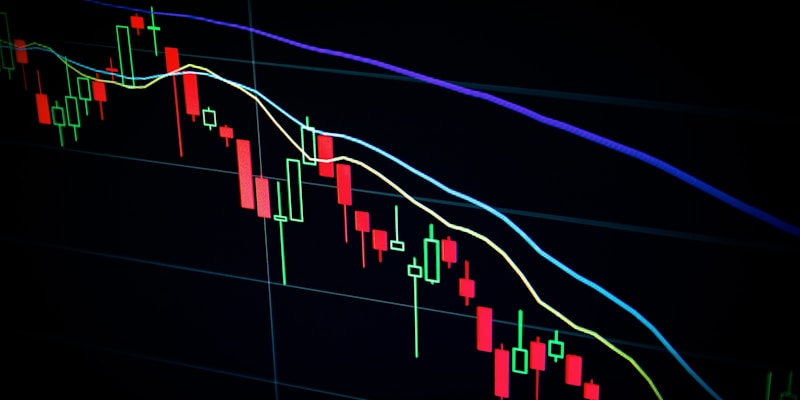
AI tools are incredibly efficient at spotting technical setups. While you should never rely solely on an algorithm to time the market, these tools can automate the process of scanning thousands of stocks for specific criteria—such as a 50-day moving average crossover or RSI (Relative Strength Index) divergence—saving you the headache of manually checking hundreds of tickers.
Top Platforms Offering Free AI Stock Analysis
Leveraging General-Purpose AI
Large Language Models (LLMs) have become surprisingly adept at financial data interpretation. By feeding financial statements into an AI assistant, you can ask targeted questions like, "What are the primary risks mentioned in the latest quarterly report for Tesla, Inc.?"
Specialized Financial AI Platforms
Beyond general chatbots, several platforms offer dedicated, freemium AI tools. These platforms often aggregate SEC filings, social media sentiment, and traditional price data to provide a "Market Health Score" or a "Stock Sentiment Index."
Strategies for Combining AI Tools with Fundamental Analysis
Step-by-Step Workflow
To maximize the value of free AI stock analysis tools, you must treat them as an assistant, not a decision-maker. 1. Macro Screening: Use AI tools to scan for sectors that show positive momentum. 2. Qualitative Review: Input earnings call transcripts into an AI to extract key themes or management sentiment shifts. 3. Fundamental Validation: Cross-check AI summaries against primary sources like the official SEC website. 4. Portfolio Monitoring: Use AI alerts to stay updated on major news affecting your holdings in companies like Amazon.com, Inc..
Maintaining Human Oversight
The danger of AI is the "black box" effect. Always verify the math. If an AI claims a company has a P/E ratio of 10, check that number against a trusted financial portal. AI can occasionally "hallucinate" numbers, which is why your final analysis must always be grounded in verified financial data.
Limitations: What Free AI Tools Cannot Do
The Context Gap
AI lacks the intuition to understand "Black Swan" events or the nuanced history of a company’s leadership. It cannot predict market crashes based on global sentiment alone, as markets are driven by human psychology—which is often irrational.
Data Latency
While some premium tools offer real-time data, many free AI tools operate on a delay. For a long-term investor, a 15-minute delay is irrelevant; for a day trader, it is fatal. Know the limitations of your platform’s data freshness before making a trade.
Comparison Table
| Feature | Basic AI Chatbot | Specialized AI Screener | Financial News Aggregator | |---|---|---|---| | Data Depth | High (General) | High (Financial) | Medium (Sentiment) | | Real-Time Data | Rare | Yes (Delayed) | Yes | | Ease of Use | Very High | Medium | High | | Best For | Qualitative Analysis | Finding Opportunities | Sentiment Tracking |
Key Takeaways
- AI is an Assistant: Use these tools to augment your research, not to replace your judgment.
- Verify Everything: Always cross-reference AI-generated statistics with official company filings.
- Focus on Sentiment: AI is exceptionally good at gauging market mood, which can be a leading indicator of price action.
- Define Your Strategy: Whether you are a growth, value, or income investor, customize your AI prompts to reflect your goals.
- Stay Disciplined: No tool can protect you from bad risk management. Keep your position sizes reasonable.
Frequently Asked Questions
Q1: Are free AI stock analysis tools actually accurate?
AI tools are highly accurate at processing data and identifying patterns, but they can suffer from data latency or "hallucinations" where they misinterpret complex tables. They are most accurate when used for summarizing documents or scanning for predefined technical criteria.
Q2: Can AI predict the next stock market crash?
No. AI uses historical data to identify trends. While it can detect bubble-like conditions or high volatility, it cannot predict unpredictable geopolitical events or systemic shocks.
Q3: How do I choose the right tool for me?
Consider your investment style. If you are a fundamental investor, look for tools that summarize annual reports. If you are a technical trader, look for platforms that offer AI-driven chart pattern recognition.
Conclusion
The evolution of financial technology has brought us into an era where "information asymmetry"—the advantage held by those with better data—is narrowing. By utilizing the best free AI stock analysis tools, you can significantly reduce the time spent on manual research while gaining deeper insights into the companies you care about, such as Meta Platforms, Inc.. However, remember that tools are only as good as the investor wielding them. Combining the analytical power of AI with a sound fundamental strategy is the recipe for sustainable long-term success. Ready to take your research to the next level? Explore the institutional-grade, AI-powered insights available on Stockinhood to start making more informed decisions today. Disclaimer: Stockinhood provides AI-generated market research for educational and informational purposes only. All analysis should not be considered financial advice. Past performance does not guarantee future results. Consult a licensed financial advisor before making investment decisions.
Stockinhood AI
AI-Generated Content
Disclaimer: This article is for informational and educational purposes only and does not constitute financial advice. All AI-generated content should be independently verified. Past performance does not guarantee future results. Consult a licensed financial advisor before making investment decisions.
Related Articles

Ready to dive deeper?
Explore AI-powered stock analysis and market research tools.
Explore Stockinhood