
AI vs Traditional Stock Analysis: Which Strategy Wins in 2024?
Table of Contents
- Introduction
- The Pillars of Traditional Stock Analysis: Fundamentals and Technicals
- The AI Revolution: How Machine Learning Redefines Market Research
- Performance Head-to-Head: Speed, Accuracy, and Data Volume
- The Human Element: Why Traditional Wisdom Still Matters
- The Rise of the Quantamental Approach: The Best of Both Worlds
- Comparison Table
- Key Takeaways
- Frequently Asked Questions
- Conclusion
Introduction
The global financial landscape is currently undergoing a seismic shift, driven by the rapid evolution of large language models (LLMs) and predictive algorithms. For decades, the debate centered on whether active management could beat the passive index. Today, the conversation has moved to a more technologically nuanced battleground: ai vs traditional stock analysis. As retail investors gain access to institutional-grade tools once reserved for hedge funds, the question of which methodology performs better is no longer academic—it is essential for survival in volatile markets.
Traditional analysis relies on human intuition, historical patterns, and the careful vetting of financial statements. In contrast, AI-powered analysis leverages massive datasets, natural language processing (NLP), and neural networks to identify non-linear relationships that the human eye might miss. Whether you are analyzing a tech giant like Apple Inc. or a high-growth semiconductor leader like NVIDIA Corp., the approach you choose dictates your entry points, risk management, and ultimate alpha generation. This comprehensive guide explores the performance metrics, pros, cons, and future outlook of both methods to help you decide where to place your capital.
The Pillars of Traditional Stock Analysis: Fundamentals and Technicals
Traditional stock analysis is divided into two primary disciplines: fundamental analysis and technical analysis. Both have been the bedrock of investing since the days of Benjamin Graham and Jesse Livermore.
Fundamental Analysis: The Search for Intrinsic Value
Fundamental analysis is the process of evaluating a company's financial health, competitive position, and management quality to determine its "intrinsic value." When an analyst looks at Microsoft Corp., they examine the balance sheet, income statement, and cash flow reports. They calculate ratios such as Price-to-Earnings (P/E), Debt-to-Equity, and Free Cash Flow (FCF) yield. The goal is simple: if the market price is lower than the calculated intrinsic value, the stock is a "buy."
This method requires a deep understanding of macroeconomics and industry cycles. For example, understanding how interest rate hikes by the Federal Reserve impact the discounted cash flow (DCF) models of growth stocks like Alphabet Inc. is a hallmark of traditional fundamental research. The primary strength here is the ability to account for qualitative factors—such as a CEO's vision or a company's "moat"—which are often difficult to quantify purely through numbers.
Technical Analysis: Decoding Market Psychology
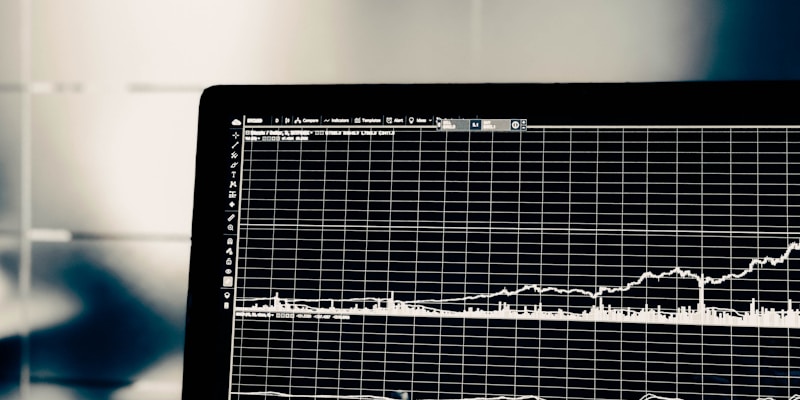
Technical analysis ignores the "why" behind a company's performance and focuses entirely on the "what." By studying historical price charts and volume data, technical analysts look for patterns such as Head and Shoulders, Double Bottoms, or Moving Average Crossovers. Tools like the Relative Strength Index (RSI) and Bollinger Bands help traders identify overbought or oversold conditions.
The philosophy is that all known information is already baked into the price, and market movements are driven by human psychology—fear and greed. However, the limitation of traditional technical analysis is its subjectivity; two different traders might look at the same chart of Tesla Inc. and see two entirely different trends.
The AI Revolution: How Machine Learning Redefines Market Research
Artificial Intelligence has moved beyond simple automation. In the context of ai vs traditional stock analysis, AI represents a paradigm shift where computers "learn" from data rather than just following static rules.
Predictive Modeling and Pattern Recognition
AI systems, particularly those using Deep Learning, can ingest millions of data points simultaneously. While a traditional analyst might track 10 indicators for Meta Platforms, an AI model can track 10,000. These models use Random Forests or Gradient Boosting Machines (GBM) to find correlations that aren't apparent on a standard 2D chart. For instance, an AI might discover that a specific weather pattern in the Midwest correlates with a 2% price movement in agricultural stocks three weeks later.
Sentiment Analysis through NLP
One of the most powerful applications of AI in finance is Natural Language Processing. AI can "read" thousands of news articles, earnings call transcripts, and social media posts in seconds. When Amazon.com Inc. releases its quarterly report, AI tools can instantly quantify the sentiment of the CEO’s tone, detecting subtle shifts in confidence that a human listener might miss. Platforms like Stockinhood use this technology to provide sentiment scores, giving investors an edge in understanding market perception before it is fully reflected in the stock price.
Performance Head-to-Head: Speed, Accuracy, and Data Volume
When we compare ai vs traditional stock analysis performance, the results often depend on the timeframe and the type of market environment.
Speed and Execution
In terms of speed, AI wins by a landslide. High-frequency trading (HFT) algorithms can execute trades in microseconds. For a retail investor, this means AI can scan the entire S&P 500 for a specific breakout pattern while a human is still opening their first chart. If a news event breaks regarding Advanced Micro Devices, AI-driven systems have likely already adjusted their positions before the average investor has even received the push notification.
Accuracy and Overfitting
Where traditional analysis often holds its own is in the realm of "common sense." AI models are prone to a phenomenon called "overfitting," where they find patterns in historical data that don't actually exist or won't repeat in the future. A human analyst knows that a once-in-a-century pandemic like COVID-19 changes the rules of the game. An AI trained solely on 2010-2019 data might struggle to adapt to the regime shift of 2020. Traditional analysis provides a sanity check that prevents the "garbage in, garbage out" problem common in poorly tuned algorithms.
Data Processing Volume
Traditional analysis is limited by the "bandwidth" of the human brain. An elite analyst might cover 15 to 20 stocks in a single sector. AI, however, can provide comprehensive coverage of 50,000+ global equities. This allows investors to find hidden gems in small-cap markets or international exchanges that are ignored by mainstream Wall Street research.
The Human Element: Why Traditional Wisdom Still Matters
Despite the computing power of AI, human judgment remains irreplaceable in specific scenarios. Investing is not just about data; it is about understanding human behavior and systemic risk.
Corporate Governance and Ethics
An AI can analyze the balance sheet of a company, but it might struggle to evaluate the ethics of its board of directors. Human analysts are better at detecting "red flags" in management behavior, such as excessive executive compensation or lack of transparency during an investigative report. For companies like JPMorgan Chase & Co., understanding the regulatory environment and the nuances of banking legislation requires a level of contextual awareness that current AI models are still developing.
Black Swan Events
Black Swan events—unpredictable events with extreme consequences—are the nemesis of AI. Because these events have no historical precedent in the training data, AI models often fail to predict them or react inappropriately. Traditional investors like Warren Buffett often succeed during these times by relying on a "margin of safety" and long-term conviction, rather than short-term data fluctuations.
The Rise of the Quantamental Approach: The Best of Both Worlds
The most successful modern investors are moving away from the binary choice of ai vs traditional stock analysis. Instead, they are adopting a "Quantamental" approach. This strategy combines the massive data-processing power of quantitative AI with the deep-dive qualitative insights of fundamental analysis.
How to Implement a Quantamental Strategy
- Screening with AI: Use AI tools to scan thousands of stocks based on complex criteria (e.g., "Find companies with increasing R&D spend but decreasing debt-to-equity ratios over 5 years").
- Validation with Fundamentals: Once the AI provides a shortlist, perform a traditional deep dive into the top 3 candidates. Check the competitive landscape and management's track record.
- Timing with Technicals/Sentiment: Use AI sentiment analysis and traditional technical indicators (like the 200-day moving average) to time your entry into a position like Netflix Inc..
By using AI as a filter and humans as the final decision-maker, investors can eliminate emotional bias while maintaining the necessary contextual oversight.
Comparison Table
| Feature | Traditional Analysis | AI-Powered Analysis | Quantamental (Hybrid) | | :--- | :--- | :--- | :--- | | Data Sources | Financial statements, news | Satellite imagery, social sentiment, big data | Integrated broad and deep data | | Decision Speed | Slow (Hours/Days) | Instant (Microseconds/Seconds) | Moderate (Strategic Speed) | | Bias Level | High (Emotional/Cognitive) | Low (Data-driven) | Balanced | | Contextual Awareness | High | Low | High | | Scalability | Low (Limit on stocks covered) | High (Global coverage) | High Efficiency | | Risk Management | Intuition-based | Statistical/Probability-based | Comprehensive |
Key Takeaways
- AI excels at scale: AI can process and analyze millions of data points across the entire global market in seconds, a feat impossible for human analysts.
- Traditional analysis provides context: Human intuition and the ability to understand non-quantifiable factors like management quality remain a critical edge.
- Sentiment is the new indicator: AI-driven sentiment analysis of earnings calls and social media offers a forward-looking view that traditional P/E ratios cannot provide.
- Beware of overfitting: AI models can sometimes find "noise" instead of "signals," making human oversight essential for long-term portfolio stability.
- The Hybrid Win: The "Quantamental" approach—using AI to find opportunities and traditional analysis to vet them—is currently the gold standard for performance.
- Accessibility is changing: Tools like Stockinhood are democratizing AI, allowing retail investors to compete with institutional hedge funds.
Frequently Asked Questions
Q1: Is AI stock analysis more accurate than a human financial advisor?
AI is generally more accurate at identifying statistical patterns and executing data-heavy tasks without emotional bias. However, a human financial advisor provides personalized goal planning, tax strategies, and emotional coaching during market crashes, which AI currently cannot replicate. In terms of pure market alpha, AI-managed funds (like those from Renaissance Technologies) have historically outperformed many human-managed funds, but they also carry different risks like algorithmic flash crashes.
Q2: Do I need coding skills to use AI for stock analysis?
No. While early AI analysis required knowledge of Python or R, modern platforms like Stockinhood provide user-friendly interfaces. You can access complex AI insights, sentiment scores, and predictive data through simple dashboards and natural language queries, making it accessible to any retail investor.
Q3: Can AI predict a stock market crash?
AI is excellent at identifying the conditions that typically precede a crash (e.g., extreme leverage, high volatility, and negative sentiment shifts). However, because many crashes are triggered by unique geopolitical events or "black swans," no system—AI or human—can predict a crash with 100% certainty. AI is best used for risk mitigation rather than absolute prediction.
Q4: How does AI handle "meme stocks" like GameStop or AMC?
AI actually has a significant advantage with meme stocks because it can track social media volume (Reddit, X/Twitter) in real-time. While a traditional fundamental analyst might see no value in GameStop Corp., an AI sentiment tool can flag the massive surge in retail interest and social momentum, allowing a trader to capitalize on the volatility regardless of the company's financials.
Conclusion
The debate of ai vs traditional stock analysis is not about which one will replace the other, but how they will integrate. While AI offers unparalleled speed and the ability to find needles in data haystacks, traditional analysis provides the thread of logic and context that holds an investment thesis together. As we look toward the future of the market, the most successful investors will be those who embrace the efficiency of machine learning while retaining the critical thinking of the human mind.
By leveraging the AI-powered research capabilities of Stockinhood, you can bridge this gap. Start using data-driven insights to validate your fundamental theories and discover opportunities in stocks like NVIDIA Corp. or Microsoft Corp. that you might have otherwise missed. The era of the solo analyst is over; the era of the augmented investor has begun.
Disclaimer: Stockinhood provides AI-generated market research for educational and informational purposes only. All analysis should not be considered financial advice. Past performance does not guarantee future results. Consult a licensed financial advisor before making investment decisions.
Stockinhood AI
AI-Generated Content
Disclaimer: This article is for informational and educational purposes only and does not constitute financial advice. All AI-generated content should be independently verified. Past performance does not guarantee future results. Consult a licensed financial advisor before making investment decisions.
Related Articles
Ready to dive deeper?
Explore AI-powered stock analysis and market research tools.
Explore Stockinhood